
Justice & Sovereignty Over Food & Environment
Agriculture in Context 4
Conference: 26-27 September 2025
School: 28-29-30 September 2025
Right to Food & Ecocide
Introduction
The Islamic University of Lebanon – Khaldeh Branch hosted the proceedings of the agricultural conference titled "Justice and Sovereignty over Food and Environment – The Right to Food and Ecocide", organized by the Agricultural Movement in Lebanon in cooperation with the Union of Municipalities of Tyre District – Disaster Management Unit, the Crisis Intervention Task force at the Lebanese University, the "SEAC" Socio-Economic Action Collective, the "Syiada" Network, and the "Arab Network for Food Sovereignty", in the presence of the Director of the Islamic University in Tyre, Dr. Ghassan Jaber, the Vice President of the Union of Municipalities of Tyre District, Adel Saad, the Director of the Disaster Management Unit at the Union, Mortadaa Mhanna, the President of the Agricultural Movement in Lebanon, Sarah Salloum, Botros Sader Agrimovement, and municipal and agricultural figures, environmental activists, university students, and interested parties.
Conference Day 1 - The Opening - Friday, September 26, 2025
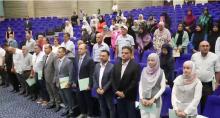
The Opening: The Islamic University of Lebanon – Khaldeh Branch hosted the proceedings of the first agricultural conference titled "Justice and Sovereignty over Food and Environment – The Right to Food and Ecocide", organized by the Agricultural Movement in Lebanon in cooperation with the Union of Municipalities of Tyre District – Disaster Management Unit, the Crisis Intervention Cell at the Lebanese University, the "Siaq" Socio-Economic Action Group, the "Siada" Network, and the "Arab Network for Food Sovereignty".
Dr. Ghassan Jaber: After an introduction by Ayman Dandash, the first session opened with a minute of silence for the souls of the martyrs of the Israeli aggression on Lebanon, followed by the Lebanese National Anthem. Then, Dr. Jaber delivered the university's speech, emphasizing the importance of the conference in highlighting the role of the agricultural sector and the severe damage it has suffered due to Israeli attacks, especially in the southern regions.
Sarah Salloum & Boutros Sader: The President of the Agricultural Movement explained that the conference aims to highlight the reality of agriculture in Lebanon and the difficulties it faces that affect national food security. Boutros Sader explained the movement's activities and the importance of cooperation.
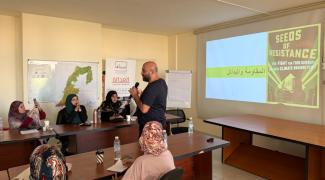
Eng. Razan Zuayter: Called on behalf of the "Arab Network for Food Sovereignty" for "Resistance through Food," and presented the supportive experience for agriculture undertaken by the Arab Group for the Protection of Nature in Gaza.
Adel Saad: Pointed out that the conference constitutes an essential station for restoring national policies in the field of food security.
Session 1: Environment and Food in Lebanon after the Aggression
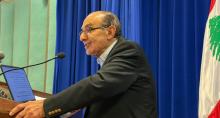
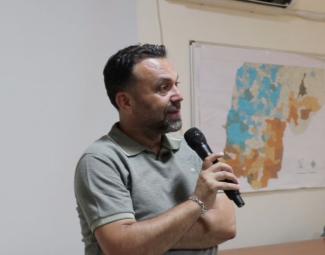
Diagnosing the State of Lebanese Agriculture. This session covered a detailed explanation of the history of modern Lebanese agriculture. It addressed the repercussions of the Zionist aggression on Lebanon, and the role of international aid. Dr. Riad presented recent data on the general agricultural economic situation and the effects of global corporations.
Session 2: The Food and Environmental Crisis in its Regional Context
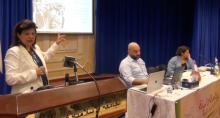
Addressed agricultural policies in Palestine as a tool for occupation, and policies in Egypt. Eng. Razan Zuayter spoke about Resistance through Food Sovereignty. Researcher Wael Gamal spoke on agricultural policies in Egypt. Ali Aznag spoke on access to food in the region. Dr. Carla Khater (CNRS) assessed the environmental damages in Lebanon due to the aggression.
Session 3: Agriculture, Labor, and Land
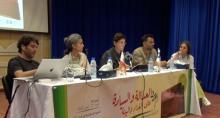
Discussed agricultural property policies and agrarian reform. Speakers included Dr. Mona El Khoshen (AUB) and Dr. Kanj Hamadeh. The day concluded with a presentation on agroecology by Corinne Jabbour (Jibal) and Serge Harfoush (Seeds of Our Roots).
Conference Day 2 - Policy & Justice - Saturday, September 27, 2025
Session 4: Do Government Policies Serve Food Sovereignty?
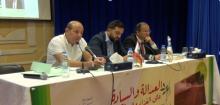
Addressed the role of Lebanese government policies. Dr. Hassan Al-Ashmar spoke about the Legal Framework. Mr. Mohammad Al-Husseini (Farmers Gathering) spoke about the impact of policies on farmers.
Session 5: International Justice Confronting Ecocide
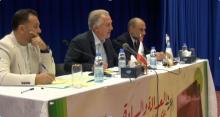
Mr. Bassam Al-Kantar: Discussed challenges facing the National Human Rights Commission in Lebanon and recommended reconsidering the ICC's jurisdiction regarding Israeli crimes.
Dr. Omar Nashabe: Addressed "Ecocide" history (Agent Orange) and the legal gaps preventing it from being an independent international crime.
Study: Refugee Women Agricultural Workers
Presented by Doaa Khashan and Ghassan Makarem. Detailed the severe challenges facing Syrian refugee women: low wages, the exploitative "Shawish" system, and lack of protection.
Roundtable: Who Makes Our Food?
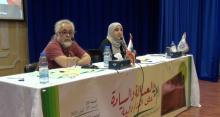
Closing discussion on "Forgotten Justice". Participants: Amel Association, Action Against Hunger, Farmers, Seeds of Sour, CTM.
Eco School Day 1 - Field Campaign - Sunday, September 28, 2025
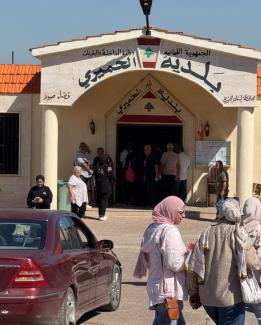
Campaign: "For the Land... For the South"
Field campaign and solidarity visits to villages in Tyre district. Distribution of fruit trees and rare local varieties. Over 1,000 seedlings distributed to Al-Hmayri, Al-Knisseh, and Jibal Al-Botm. Visit to ancient pistachio lands.
Campaign Figures
- 15+ Villages reached (Marakeh, Yanouh, Naqoura...).
- 3,916 Beneficiary Farmers.
- 18,800 Tree Seedlings distributed.
- 3,000 Liters of Organic Fertilizer.
- Varieties: Laurel, Carob, Pistachio, Guava, Fig, Pomegranate, Olive, etc.
Eco School Day 2 Analysis & Practice - Monday, September 29, 2025
From Criticism to Action: Field visit to a large Banana Monoculture farm. Moderated by Eng. Ali Dabouk. Participants critically discussed the export-oriented model and its environmental harm.
Workshop: Dialogue with Mr. Morteza Mhanna on the role of municipalities in sustainability and resilience.
Siada Network: Introduction to the network and experiences from Tunisia and Egypt.
Discussion: Justice in Food Systems: Who makes our food?
Closing: Cultural visit to Tyre ruins.
Eco School Day 3 Sovereignty & Learning Tuesday, September 30, 2025
Seeds of Sour Farm: The final day was at the "Seeds of Sour" farm to learn about the agroecology model: local seed production, bioproducts, compost, and natural pest control.
Working Groups: Food Systems, Seeds/Soil, Labor Justice, Advocacy.
Writing for the Cause: Workshop on advocacy writing.
Eco School Report Conclusion
The school concluded its activities in South Lebanon (Sept 26-30), confirming the importance of food sovereignty in a war zone. This work expresses the vision of the Agricultural Movement in Lebanon.
Recommendations
General Recommendations
- Adopt legislative framework for Right to Food.
- Establish National Council for Food Systems.
- Activate Committee for Protection of Right to Food.
- International accountability for Israeli environmental crimes.
- Recognize environmental destruction as a crime.
- Launch food/environmental emergency plan.
- Ban GMOs and prevent seed monopoly.
- Preserve authentic Lebanese Cannabis seed.
1. Human Social Dimension
- Interactive relationships with farmers.
- Municipal networking for knowledge.
- Activate farmer unions.
2. Scientific & Practical
- Institutionalize Eco School.
- Preserve traditional knowledge & seeds.
- Establish seed libraries.
- Shift from monocultures.
3. Economic Dimension
- Direct farmer-consumer links.
- Weekly markets & festivals.
- Tax facilities.
4. Research Dimension
- Research ethics.
- University research for agroecology.


